
Checked against the sources on October 19, 2026
Florida septic tank laws, explained for Southwest Florida
Florida's septic rules come from state law and the state rules in chapter 62-6, and your county health department applies them. This page puts them in plain words for a home in Lee, Collier, Charlotte, Hendry, Glades or DeSoto County: when you need a permit, where a system can go, where the nitrogen rule applies, and what happens when sewer reaches your street. Every rule here comes from a government source, listed at the end of the page.
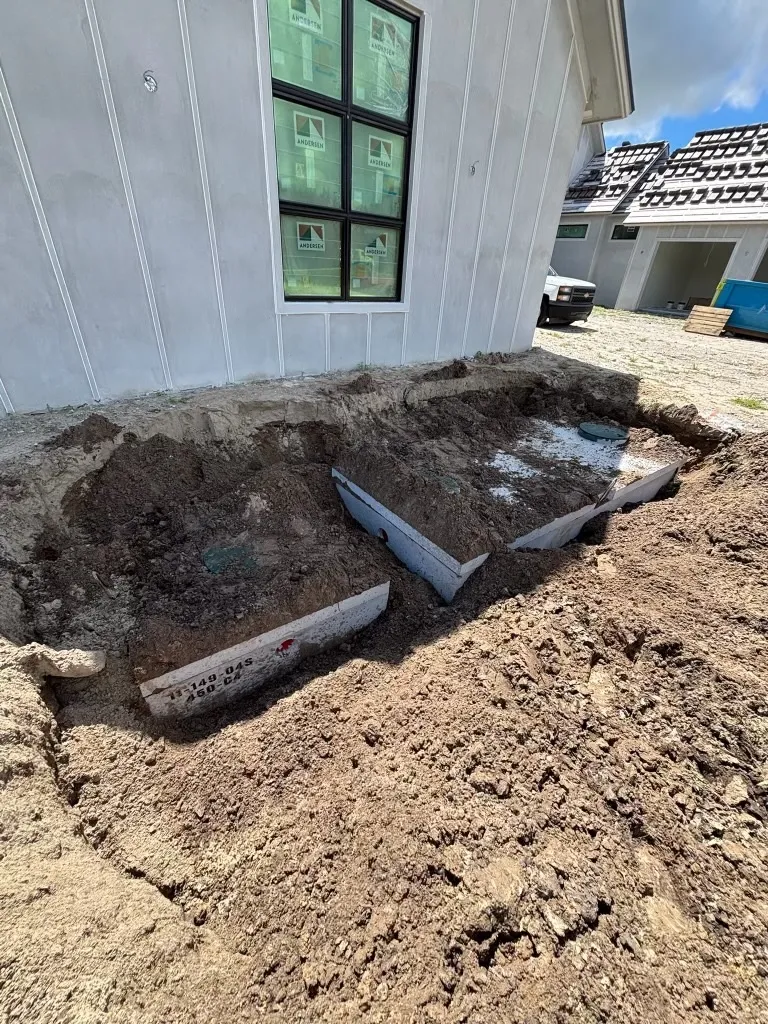
Who writes the rules, and who issues the permit
The Florida Department of Environmental Protection, called DEP, has been in charge of the state’s septic rules since July 1, 2021. The Clean Waterways Act of 2020 moved the program there from the Department of Health.
The permit desk did not move with it. In Lee, Collier, Charlotte, Hendry, Glades and DeSoto counties, the county health department still takes the application, does the inspections and issues the permit. For now, DEP issues septic permits itself only in the Panhandle counties and Marion County.
The rules are section 381.0065 of the Florida Statutes and chapter 62-6 of the Florida Administrative Code. A county or city can add rules of its own on top. Charlotte County’s pumping rule for homes near canals, further down this page, is one of them.
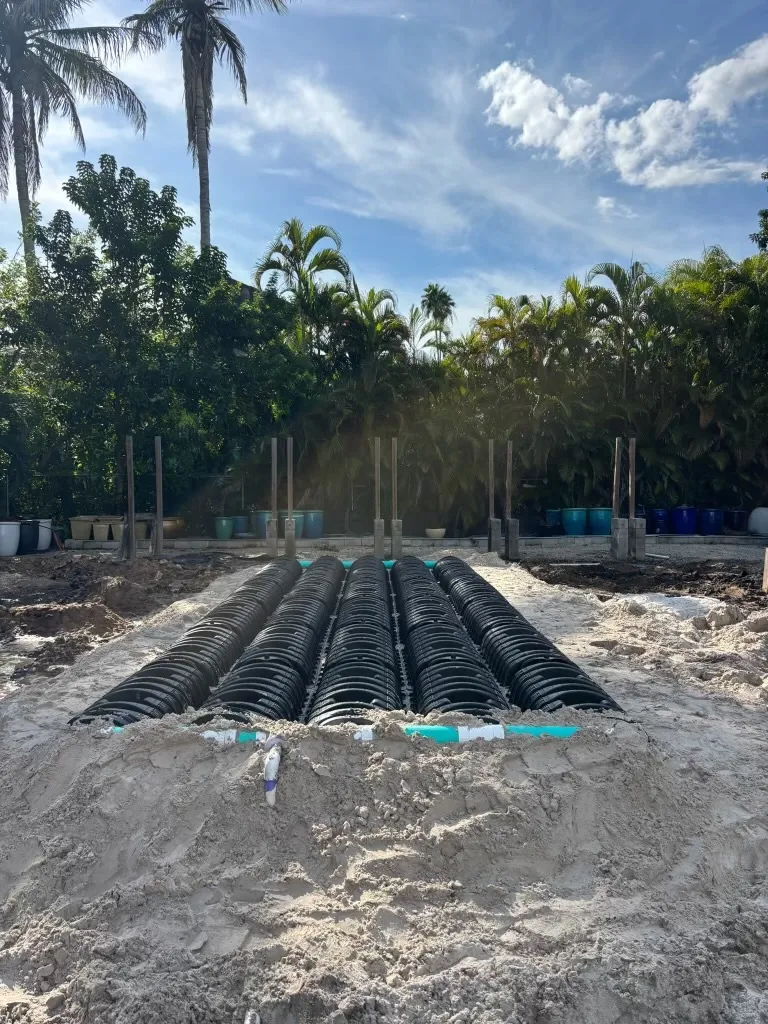
When you need a permit
State law puts it in one sentence: no one may build, repair, change, abandon or run a septic system without a permit first. In practice that covers more than a new system:
- Repairing a failing drain field or tank.
- Adding a bedroom, or any change that sends more water to the system.
- Abandoning a tank after the house connects to sewer.
- Running an aerobic treatment unit, which needs an operating permit for as long as it is in use.
A repair permit is good for 90 days from the day it is issued, and a construction permit for 18 months. For a repair, the health department asks for the tank to be pumped and for the contractor to check its size and condition on the state’s evaluation form, which goes in with the application.
A remodel of a single-family home that adds no bedroom is lighter. State law skips the system evaluation and upgrade, as long as the addition does not cover any part of the system or cut into its setbacks or the open ground it needs. The health department checks your floor plan and site plan to confirm that. In Lee County it still takes an application and a fee, just without the pump out and the evaluation form. Add a bedroom in Lee County and the system has to be brought up to current rules.
Since July 1, 2022, an owner, or a contractor the owner authorizes, can hire a private provider to do the inspections instead of the county. The provider cannot inspect a system it installed.
Building a new home on septic? Under a 2026 change to the law, a city or county may not hold up the building or plumbing permit for a single-family home until the septic construction permit is issued. Proof that you applied for it is enough. The septic system itself still cannot be built until its own permit is issued.
Florida septic setbacks: how far from a well, a canal and the house
These are the minimum distances in the state rule as amended on June 8, 2026, for systems built under it:
- 75 feet from a private drinking water well, or a well shared by three or four homes.
- 50 feet from an irrigation well or a heat pump well.
- 100 feet from a public drinking water well if the place it serves puts out 2,000 gallons of sewage a day or less, and 200 feet if it puts out more.
- 75 feet from a canal, lake, river or other surface water, measured from its legal line: the mean high-water line on tidal water, or the mean annual flood line on fresh water. Not from wherever the water sits that day.
- 10 feet from a storm sewer pipe where possible, and never less than 5 feet.
- 10 feet from a drinking water line unless it is sleeved or schedule 40 pipe, and never closer than 24 inches.
- 5 feet from a building foundation, including the pilings of a raised house, a mobile home wall, a pool wall and the property line, and never under a building.
- 15 feet from a swale or retention area built to drain within 72 hours of rain, or from a ditch that is normally dry.
The drain field also needs unobstructed ground: one and a half times the field’s size, counting the field, in one piece and on top of the setbacks. And it has to sit high enough: the bottom of the drain field at least 24 inches above the water table in the wettest season of the year. On much of the low, wet ground here, that is often why a drain field is raised on fill.
There are exceptions. A lot platted before 1972 needs only 50 feet from surface water, some lots platted from 1972 to 1983 have rules of their own, a repair that cannot meet today’s distances follows smaller ones set for repairs, and a variance is possible in hardship cases. On a narrow lot with a canal out back and a well in the yard, those lines decide where the system fits, and sometimes what kind of system it has to be. The health department makes the call.
The nitrogen rule, and where it applies here
Since July 1, 2023, a new septic system on a lot of one acre or less needs a nitrogen-reducing system instead of a conventional one when the lot is inside a state water cleanup plan area and sewer is not available. Where sewer is available inside one of those areas, a new septic system is not allowed at all. The law behind it is House Bill 1379. The cleanup plans are called Basin Management Action Plans, or BMAPs.
Three of those plans reach into the counties we serve:
- Caloosahatchee River and Estuary. The watershed runs from Lake Okeechobee to San Carlos Bay, across parts of Lee, Hendry, Glades, Collier and Charlotte counties.
- Everglades West Coast. The Hendry Creek and Imperial River basins, which drain into Estero Bay in south Lee County.
- Lake Okeechobee. Its watershed takes in parts of Glades and Hendry counties.
Whether one lot is inside a plan area is a question for the map. DEP publishes one showing where nitrogen-reducing systems are required, linked in the sources below, and the county health department makes the call on a permit.
The systems DEP lists as meeting the rule are in-ground nitrogen-reducing biofilters, Florida-approved aerobic treatment units certified to the NSF 245 nitrogen standard, and Florida-approved nitrogen-reducing performance-based systems. The law also accepts another wastewater system that cuts nitrogen by at least 65 percent. The rule is about new systems, but in some cases a complete replacement needs a new system permit, and then the rule applies to it. Ask before you plan one.
You may have read that existing septic systems must be upgraded or connected to sewer by 2030. That part of the law covers the Indian River Lagoon on Florida’s east coast. It does not reach Southwest Florida.
Aerobic treatment units come with standing rules
An aerobic treatment unit, or ATU, pumps air into the tank so bacteria break the waste down further before it reaches the drain field. Owning one comes with rules a standard tank does not have:
- An operating permit from the health department, renewed every two years.
- A maintenance contract with a maintenance entity the state has permitted, for as long as the system is in use. On a new system the first contract runs two years, and each renewal at least one year.
- A service visit at least twice a year for a home, reported to the health department by the maintenance entity. A unit serving a business is inspected four times a year.
- A health department inspection at least once a year.
The owner of a single-family home who lives in it can be permitted as their own maintenance entity, once the manufacturer certifies they have been trained on the system. Buying a home with an ATU? The operating permit does not transfer with the house, so the new owner needs one, and a maintenance contract, in their own name. We are certified on Hoot, B.E.S.T., Cajun Aire, Fuji Clean USA, Aqua Aire and Aqua Safe, Norweco and Jet units.
When sewer reaches your street
For a home, sewer counts as available when a line that can serve the house runs in a public easement or right-of-way bordering the property, and the system has room to take the flow. The utility has to tell you at least a year before that happens. Once it sends written notice that the line is ready, a working system has 365 days to connect. A system that is failing gets less time: 90 days from the health department’s written notice, with one extension of up to 90 days in a hardship case.
Within 90 days of connecting, the old tank has to be abandoned. Since June 2026 the state rule offers two routes. Under a general permit, the contractor files a notice of intent, the tank is pumped by a permitted septage hauler, the bottom is broken or the tank collapsed or removed, it is filled with clean sand or other suitable material and covered with soil, and the contractor sends in photographs and a signed certification instead of waiting for an inspection. Under a construction permit, the same work is inspected by the health department or a private provider. When a utility runs its own abandonment program, it can handle those steps instead. Bonita Springs Utilities does this in Sun Village, and the Village of Estero runs a septic to sewer program aimed at its flood-prone neighborhoods.
Buying or selling a home on septic
Florida law says no government may require a septic inspection at the point of sale. Construction, repair and modification permits pass to the buyer with the title, and a government may not attach newer permit requirements to the title when the house changes hands. An ATU operating permit is the exception: it does not transfer, so the buyer applies for their own.
A buyer can still ask for an inspection before closing. The county health departments keep permit records too: Lee County has an online lookup for applications and inspections, Charlotte County has a permit lookup, and Collier County publishes a guide to searching its septic permits.
What the law says about pumping
For a standard septic tank, Florida sets no statewide pumping schedule. How often a tank needs it depends on its size and the household using it, which our guide on how often to pump a septic tank walks through.
Charlotte County is the local exception. In unincorporated Charlotte County, a standard system whose drain field is within 300 feet of a canal or other surface water has to be pumped at least once every five years, with a certification and a permit through the health department. The Punta Gorda page explains how the county bills for it.
Your county health department
Each county runs the same state rules with its own forms and offices.
- Lee County: offices in Fort Myers and Lehigh Acres, with online status checks for applications and inspections.
- Collier County: permits, inspections and a guide to searching past permits.
- Charlotte County: the managed system program for homes near canals, and an online permit lookup.
- Hendry County: permits and inspections through the county health department.
- Glades County: the county health department issues septic permits. Its environmental health page has the office’s contact details.
- DeSoto County: new and repair applications need a utilities verification form, a site information form and an owner authorization along with the state application.
Where we come in
The rules are the health department’s call. The work they cover is ours: pumping, inspections, repairs, drain fields, new systems and ATU maintenance contracts across all six counties.
If you are not sure which rule touches your property, call (239) 225-2255. It is the direct office line, a real person answers, and if the question belongs with the health department, we will tell you that too.
Where these rules come from
Government sources only. If a rule here and the source disagree, the source wins, and we would like to hear about it.
- Section 381.0065, Florida Statutes: onsite sewage treatment and disposal systems (opens in a new tab)
- Section 381.00655, Florida Statutes: connecting to an available sewer (opens in a new tab)
- Chapter 62-6, Florida Administrative Code: standards for onsite sewage systems (opens in a new tab)
- Rule 62-6.005: location and installation, as amended June 8, 2026 (opens in a new tab)
- Rule 62-6.003: permits, including operating permits (opens in a new tab)
- Rule 62-6.011: abandoning a septic system, as amended June 8, 2026 (opens in a new tab)
- Florida DEP: Onsite Sewage Program (opens in a new tab)
- Florida DEP: which agency issues septic permits in each county (opens in a new tab)
- Florida DEP: nitrogen-reducing systems and House Bill 1379 (opens in a new tab)
- Florida DEP: map of nitrogen-reducing system requirements (opens in a new tab)
- Florida DEP: 2025 Caloosahatchee River and Estuary BMAP (opens in a new tab)
- Florida DEP: 2025 Everglades West Coast Basin BMAP (opens in a new tab)
- Florida DEP: 2025 Lake Okeechobee BMAP (opens in a new tab)
- Florida Department of Health in Lee County: septic systems (opens in a new tab)
- Florida Department of Health in Lee County: additions to a building on septic (opens in a new tab)
- Florida Department of Health in Lee County: aerobic treatment units (opens in a new tab)
- Florida Department of Health in Lee County: septic tank abandonment (opens in a new tab)
- Florida Department of Health in Collier County: septic systems (opens in a new tab)
- Florida Department of Health in Charlotte County: onsite sewage program (opens in a new tab)
- Florida Department of Health in Charlotte County: repair or replacement permits (opens in a new tab)
- Florida Department of Health in Charlotte County: managed systems (opens in a new tab)
- Florida Department of Health in Hendry County: environmental health (opens in a new tab)
- Florida Department of Health in Glades County: environmental health (opens in a new tab)
- Florida Department of Health in DeSoto County: onsite sewage disposal (opens in a new tab)
Common questions
Do I need a permit to replace a septic tank in Florida?
Yes. State law says no one may build, repair, change or abandon a septic system without a permit first, and in our six counties the county health department issues it. In some cases a complete replacement needs a new system permit, which brings in today's rules.
How far does a septic system have to be from a well in Florida?
On most lots, at least 75 feet from a private drinking water well, or one shared by three or four homes, and 50 feet from an irrigation or heat pump well. A public drinking water well needs 100 or 200 feet, depending on how much sewage the place it serves puts out. Some older lots have their own rules, and the health department makes the call.
Is a septic inspection required to sell a house in Florida?
No. Florida law says a government may not require a septic inspection at the point of sale. A buyer can still ask for one before closing. Construction and repair permits pass to the new owner with the title, but an ATU operating permit does not.
Does the new septic law make me replace my system?
Not a system that is already in the ground and working. In Southwest Florida the 2023 law applies to new systems on lots of one acre or less inside a state cleanup plan area with no sewer available. The rule that reaches existing systems by 2030 covers the Indian River Lagoon on the east coast. A local septic to sewer project can still require you to connect when the line reaches you.
How long do I have to hook up once sewer reaches my street?
If your system is working, one year: 365 days from the utility's written notice that sewer is available. If it is failing and sewer is available, the deadline is 90 days from the health department's written notice. Either way, the old tank has to be abandoned within 90 days of the connection.