
SINCE 2010
Septic tank installation and replacement in Southwest Florida
Building on a lot with no sewer, or nursing a system that is past fixing? We install new septic systems and replace old ones across Lee, Collier, Charlotte, Hendry, Glades, and DeSoto counties. We pull the permit, do the digging with our own crews, set the tank and the drain field, and stay until the county has inspected it. Call the office. It is our direct line, and a real person answers.
When you need it
You have a lot with no sewer line and a house to build on it. Nothing moves until a septic system is permitted and in the ground.
Or the system you have is done. Sewage backs up into the tubs no matter how often the tank gets pumped. The yard over the drain field stays wet and smells, even in the dry season. A repair truck has been out more than once and the problem keeps coming back.
Sometimes a sale forces the question. An inspection turns up a cracked tank, a collapsed drain field, or a system nobody ever permitted. The buyer wants it fixed before closing.
And sometimes the house is growing. Florida sizes a home system by the number of bedrooms, so an addition can mean the system has to grow too.
If any of that sounds like your place, call the office. We will come and look before anyone talks about a new system. Plenty of these calls end in a repair instead.
What we do on the visit
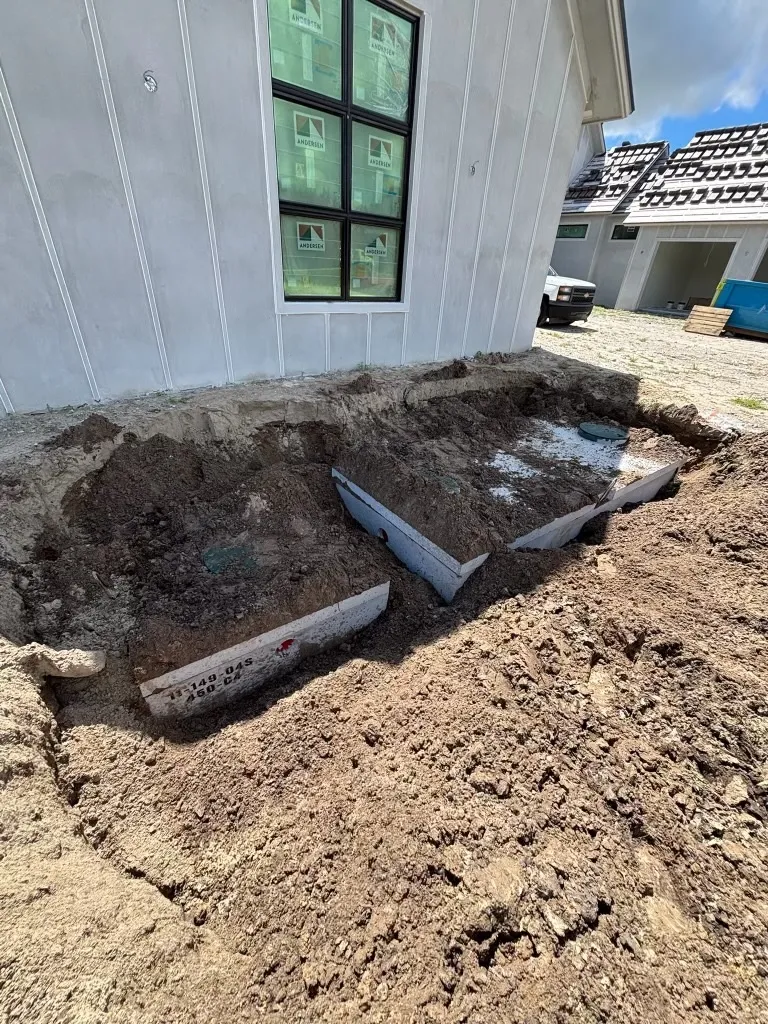
First, we look at what is there. We open the tank, check the drain field (the buried pipes and gravel or chambers that soak treated water into the ground), and tell you straight whether it can be saved. If it can, we say so and quote the repair.
If it cannot, or the lot has never had a system, we walk the site with you. We look at where the house sits, where the well is if there is one, where the setbacks fall, and where the ground drains.
Then we pull the permit. The county sends someone to evaluate the site. They check the soil and work out how high the water table rises in the wet season. That evaluation decides what kind of system the lot can take and how big it has to be.
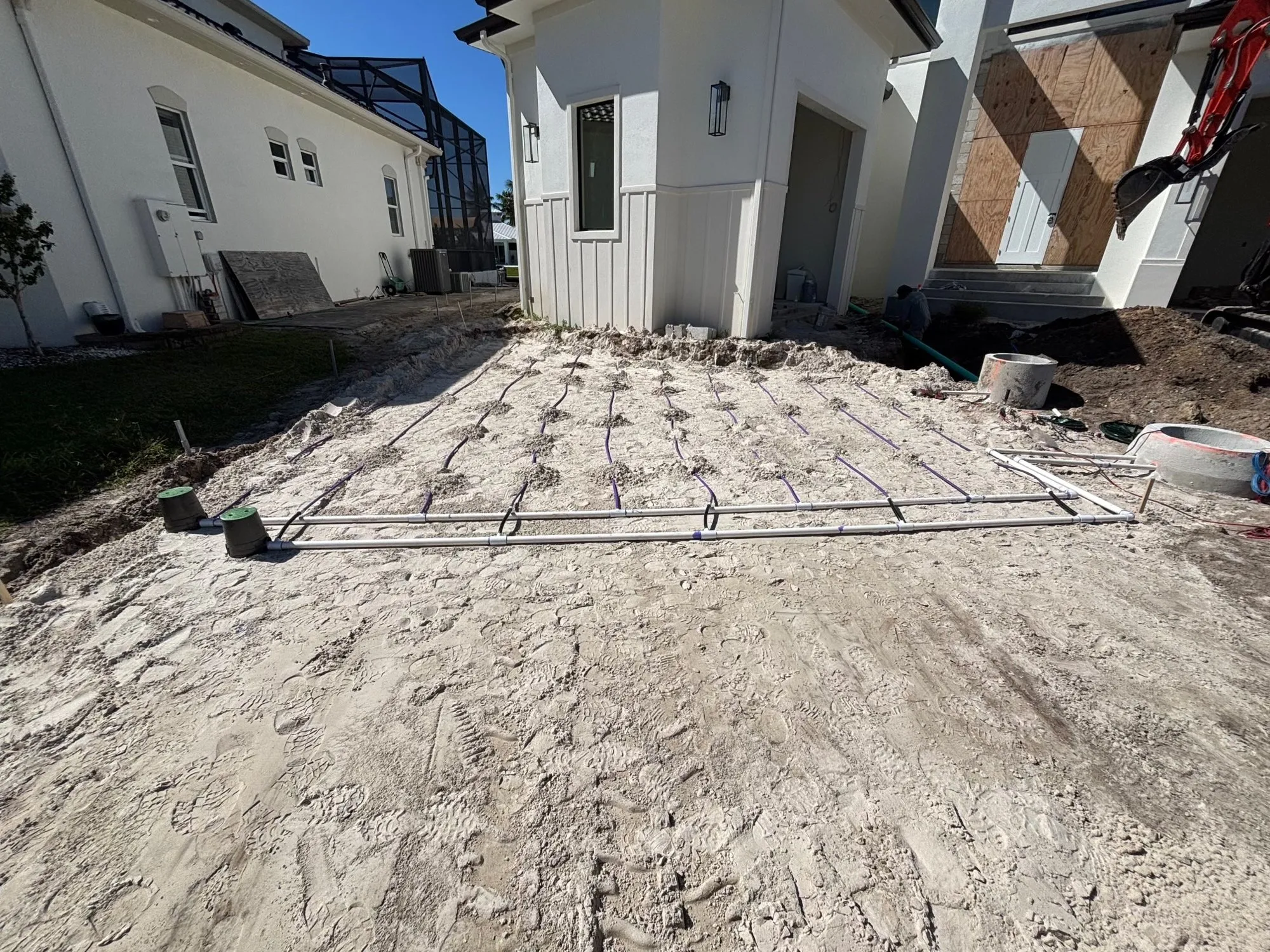
Once the permit is issued, our own crews do the digging. We set the tank, run the lines, and build the drain field to the permit drawing. On a lot with a high water table, that may mean a mound (a drain field raised in a bed of clean fill above the natural ground) or an aerobic treatment unit, which uses air to treat the wastewater further before it leaves the tank.
The county inspects the work before it is covered. We schedule that inspection, meet the inspector, and do not backfill until it passes. Then we grade the site and put the yard back.
You get an honest price before the permit is filed, and you hear from us if anything under the ground changes the plan.
What affects the job here
Water. For much of the year, Southwest Florida sits on a high water table. It is highest in the wet season, roughly June to October, when a drain field can sit in saturated ground for weeks. The site evaluation is built around that seasonal high mark, and it is the main reason so many lots here get a mound or an ATU instead of a plain gravity system.
Soil. Most of the region is sand over limestone and shell. Sand drains fast in the dry months and poorly once it is soaked. The permit sets the drain field size from that soil, and we build to it.
Permits. Florida moved onsite sewage permitting from the Department of Health to the Department of Environmental Protection in 2021. The forms changed, but the permit still runs through the county office. We deal with those offices on every install. Our guide to Florida septic tank laws covers the rest, from well setbacks to the nitrogen rule.
Sewer. Parts of Lee and Collier counties are converting from septic to sewer. Lehigh Acres and parts of Cape Coral remain largely on septic. If a sewer line is coming to your street, we will tell you, because a new system may not be the right call.
Season. The dry season is the easier time to dig. Wet season installs happen too, since a failed system cannot wait. We plan the work around the rain.
Homes, businesses, or both
Both.
For homeowners, this is the new house on the unsewered lot, the replacement when a system is past repair, and the bigger system that comes with an addition. You deal with one office from the first visit to the final inspection, and the same crew that dug the hole puts your yard back.
For businesses, it is builders and contractors who need systems in on schedule across a subdivision, and property managers replacing a failed system at a rental without losing the tenant. A business system is sized to the flow the building produces, not to a bedroom count, and the permit reflects that.
Whichever you are, one number reaches the office: (239) 225-2255. It is the direct office line, not a call center. A real person answers, and we will get you on the schedule.
Common questions
Do I need a permit to put in a septic tank in Florida?
Yes. Every new or replacement system needs a construction permit before the digging starts, and the county inspects the work before it is covered. We pull the permit, schedule the inspection, and meet the inspector on site.
Should I repair my system or replace it?
Look first, decide second. A cracked lid, a failed baffle (the wall inside the tank that keeps solids from leaving), or a bad pump is a repair. A tank that has broken open or a drain field that stays flooded is usually a replacement. We tell you which on the visit, and we quote the repair whenever it will hold.
What is a mound system, and will my lot need one?
A mound is a drain field built up in a bed of clean sand above the natural ground. It is used when the water table sits too close to the surface for a normal buried field. The county's site evaluation decides that, not us, and mounds are common across Southwest Florida for that reason.
Can you install an aerobic treatment unit (ATU)?
Yes. An ATU is a tank that pumps air into the wastewater so bacteria treat it further before it reaches the drain field. Florida requires an ongoing maintenance contract on an ATU, and we are certified on Hoot, B.E.S.T., Cajun Aire, Fuji Clean USA, Aqua Aire and Aqua Safe, Norweco, and Jet.
Will you put my yard back after the install?
Yes. Our own crews do the grading and excavating, so the people who dug the site are the people who put it back. The ground over a new drain field needs time to settle, so keep vehicles off it and hold off on anything heavier than grass.
Does a sewer line coming to my street change the answer?
It can. Parts of Lee and Collier counties are converting from septic to sewer, and a lot that will be on sewer soon may not need a new system at all. Tell us your street and we will help you think it through before you commit to a permit.