
SINCE 2010
Septic tank inspections in Southwest Florida
Buying or selling a home on septic? A septic tank inspection tells you what shape the system is in before the sale closes, and you get the result in writing. We inspect for buyers, sellers, lenders, and property owners across Southwest Florida. Call the office and a real person answers.
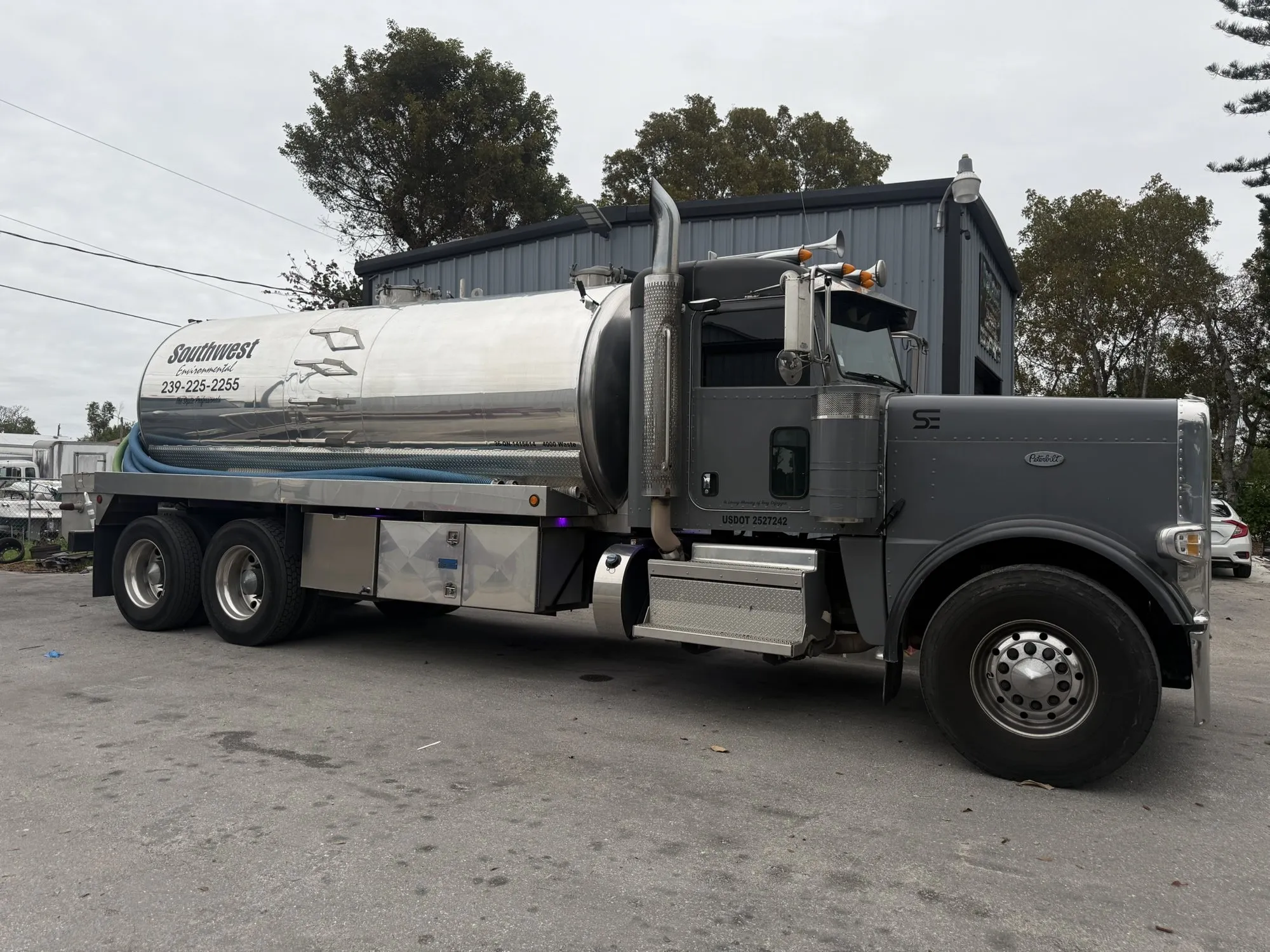
When you need it
A sale is pending and the contract, the buyer, or the lender wants the septic system checked before closing. It is often the first time anyone has opened the tank in years.
If the buyer is using an FHA loan, we are FHA loan approved for septic inspections. Tell us it is an FHA sale when you call.
You are the buyer, the house is on septic, and you want to know what you are taking on before you sign. The whole system is buried, and a failed one is expensive to replace.
You already own the home and something feels off. Drains are slow. The toilet gurgles. There is a wet patch in the yard that never dries, a smell near the tank, or an alarm you have never heard before. An inspection tells you whether it is a small fix or a bigger one.
You manage a rental or a commercial property and need a written record of the system’s condition, for a lender, a buyer, or your own files.
What we do on the visit
First we find the tank and the drain field. The drain field is the buried bed of pipe and gravel where liquid from the tank soaks into the ground. If the county has a permit and site drawing on file, we pull it. It shows where everything was put in.
We open the lids and measure what is inside. Solids settle to the bottom as sludge. Grease and lighter material float on top as scum. The liquid in between, called effluent, is what flows out to the drain field. The depth of those layers tells us how the tank has been used and cared for.
We check the baffles, the walls inside the tank that keep solids from escaping to the field. We check the lids, the risers, and the tank walls for cracks and leaks. We look at the liquid level. Too high means the field is not taking water. Too low means the tank is leaking into the ground.
If the system has a pump, we test the pump, the float switch that turns it on when the water rises, and the alarm. If it is an aerobic treatment unit, a system that uses air to treat wastewater, we check the aerator and the alarm as well.
Then we walk the drain field. Wet spots, standing water, a strip of grass greener than the rest, and odor all tell us the field is struggling. We run water from the house and watch how the tank and the field take it.
Many inspections include a pump out, because the walls and baffles of a full tank are hard to judge. Tell us what the buyer or lender needs and we will set the visit up to match. You get the result in writing, in plain words you can hand to a buyer or a lender.
What affects the job here
The water table across Southwest Florida is high for much of the year and highest in the wet season, roughly June to October. A drain field that looks fine in March can sit in saturated ground for weeks in September. We tell you which season we inspected in and what that means for the result.
Our soils are sandy over limestone and shell. They drain fast in the dry months and poorly in the wet ones, so an older field can pass one visit and struggle the next. That is why we look at the tank and the field together.
Mound systems and aerobic treatment units are common here because the water table is too high for a standard drain field on many lots. Inspecting an ATU takes someone who knows the unit. We are certified on Hoot, B.E.S.T., Cajun Aire, Fuji Clean USA, Aqua Aire and Aqua Safe, Norweco, and Jet.
Septic to sewer conversion is under way in parts of Lee and Collier counties, while Lehigh Acres and parts of Cape Coral remain largely on septic. If you are buying, ask the county utility whether the lot sits in a conversion area. It changes what you are taking on. Florida law does not require an inspection at the sale itself, and our guide to Florida septic tank laws explains which permits pass to the buyer.
Homes, businesses, or both
Both. For homeowners, this is the point of sale inspection, the pre-purchase check, and the “I have never seen this tank opened” visit. We explain what we found in words you can repeat to your agent, and if it needs a repair we give you an honest price on the spot.
For businesses, it is the restaurant or shop changing hands, the property manager checking a portfolio of rentals, the builder confirming an existing system before an addition, and the lender who wants the system’s condition in writing. One call to the office and it is handled.
Call (239) 225-2255. That is the direct office line, and a real person answers.
Common questions
Do you do FHA septic inspections?
Yes. We are FHA loan approved for septic inspections. If the buyer is using an FHA loan, tell us when you call, along with what the lender has asked for, and we will set the visit up to match. You get the result in writing to hand to the lender.
Do you have to pump the tank to inspect it?
Not every inspection includes a pump out, but it is the only way to see the walls and baffles of the tank clearly. Many buyers and lenders ask for it. Tell us what your contract calls for and we will set it up as one visit.
Who asks for a septic inspection when a house sells?
In most sales the request comes from the buyer, the lender, or the contract. Ask your agent or lender exactly what they need, then call the office. We match the inspection to it and put the result in writing.
What happens if you find a problem?
We tell you plainly what it is and whether it is a repair or a replacement. You get an honest price for the fix on the visit, and the decision is yours. No runaround and no pressure.
Can you inspect an aerobic treatment unit?
Yes. An aerobic treatment unit, or ATU, uses air to treat wastewater and has an aerator and an alarm that a standard tank does not. We hold ATU certifications on Hoot, Norweco, Jet, Fuji Clean, and more, and we check the aerator and the alarm as part of the visit.
Should I get an inspection if I am not selling?
Yes, if you have never seen the tank opened, if the house is older than you are, or if you have had slow drains or a wet spot in the yard. Pair it with a routine pump out and you get the full picture in one visit. Call the office and we will get you on the schedule.