
SINCE 2010
24/7 emergency septic service in Southwest Florida
Sewage coming up in a tub, an alarm that will not stop, or a wet, smelly patch spreading across the yard? That is an emergency, and it does not have to wait for morning. We offer 24/7 emergency septic service for homes, businesses, and municipalities across six Southwest Florida counties. Call the office any hour and a real person answers.
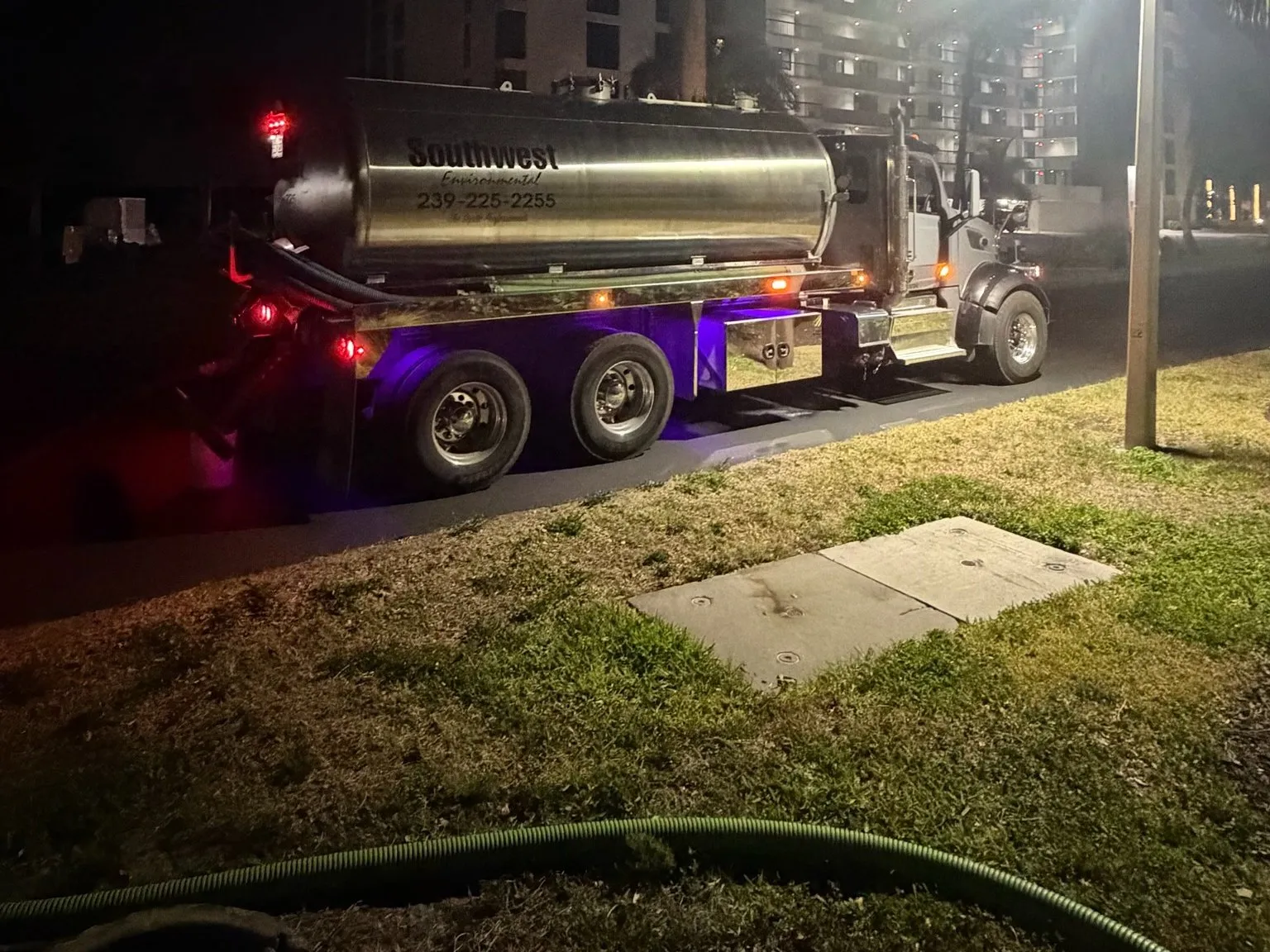
When you need it
Some septic problems can wait for a weekday appointment. These cannot.
Sewage is backing up into a tub, a shower, or a floor drain. Toilets will not flush, or every drain in the house gurgles at once. Wastewater is pooling over the tank or the drain field, or seeping out near the foundation. The alarm on the control panel is sounding and will not reset. A lift station or grease trap at a business is overflowing, and the doors have to stay open.
If any of that is happening, call right away. A backup gets worse with every flush, and raw sewage in a living space is a health problem as much as a plumbing one.

What to do before the truck arrives
You can keep the damage down while you wait.
- Stop running water. Hold off on toilets, showers, laundry, and the dishwasher. Less water in means less coming back up.
- Keep children and pets away from any wet area in the yard and from any sewage inside the house.
- Leave the tank closed. Do not lift the lid or lean over an open tank. The gases inside are dangerous, and older lids can fail.
- If an alarm is sounding, use its silence switch. If anything electrical is wet, or the ground around the panel is flooded, leave it alone and tell the office when you call.
- Clear a path. Unlock the gate and move cars away from the driveway and the area over the tank, so the truck can get close.
What we do on the visit
The crew starts by finding out where the water is stuck. They locate and open the tank and look at the level inside. A tank filled past its outlet points toward the drain field. A tank that is low while the house is backing up points toward a clogged line between the house and the tank.
Then they fix the immediate problem. That usually means pumping the tank to take the pressure off the system, clearing a blocked line, or getting a failed pump running again. If the yard is still under water, the crew holds off on pumping until it is safe, because an empty tank in flooded ground can float. For a lift station or a grease trap, it means pumping the chamber down so the system can work again.
Once things are flowing, the crew tells you plainly what caused it and what, if anything, needs a second visit: a broken baffle, a failed pump, a drain field that has stopped taking water. We give you an honest price on the visit before any repair moves ahead.
What affects the job here
Southwest Florida brings its own kind of emergency. The water table is high for much of the year and highest in the wet season, roughly June to October. After days of rain, a drain field can sit in saturated sand with nowhere to send water, and a system that worked fine in April backs up in August.
Storms add to it. Heavy rain and storm surge can flood a yard, cut the power to a pump, or knock out the alarm. When the power comes back, the first thing to check is whether the pump chamber filled while it was off.
Aerobic treatment units and mound systems are common here, because in many places the water table sits too high for a standard drain field. Those systems rely on pumps and alarms, so a power outage or a failed pump becomes an emergency faster than it would on a gravity system.
Homes, businesses, or both
All three. For homeowners, the call is usually a backup, an alarm, or a wet yard at the worst possible hour. For businesses, it is an overflowing grease trap, a lift station alarm, or a backed up line at a restaurant, a rental property, or a commercial building.
For cities and counties, it is a failed lift station, a catch basin backing water onto the street, or a line that needs jetting before it overflows. In every case it is the same office line, (239) 225-2255, and a real person answers.
Common questions
Is a septic alarm an emergency?
Treat it as one. Most often the water in the tank or pump chamber has risen higher than it should, and every flush pushes it higher. On an aerobic treatment unit it can also mean the air pump has stopped. Either way, stop using water, silence the alarm with its switch, and call the office.
Should I open the septic tank myself to look?
No. A septic tank gives off gases that can overcome a person quickly, and an old lid can give way underfoot. Keep everyone clear of the tank and let the crew open it with the right equipment.
Can I keep using the toilets until the truck gets here?
As little as you can. Every gallon that goes down a drain has to go somewhere, and in a backup that somewhere is usually the lowest drain in the house. Hold off on laundry, showers, and the dishwasher until the system has been checked.
Why do backups seem to happen after heavy rain?
Because the ground fills up. When the soil around a drain field is soaked, the field has nowhere to send water, so it backs up toward the tank and the house. Cut your water use right down. A tank pumped while the ground around it is still flooded can shift or lift and crack its pipes, so the crew checks the ground before deciding what to do.
Do you handle emergencies for restaurants and other businesses?
Yes. An overflowing grease trap, a lift station alarm, or a backed up line at a business gets the same answer as a house: call the office and a real person picks up. We work with property managers, restaurants, and city and county crews.