
SINCE 2010
Hydro excavation in Southwest Florida
Need to dig next to a gas line, a fiber run, or a water main and cannot risk a bucket hitting it? Hydro excavation digs with pressurized water and a vacuum instead of a backhoe, so what is buried comes up intact. We do it for contractors, builders, property managers, cities and counties across six Southwest Florida counties. Call the office and a real person answers.
When you need it
The locate marks run right through the spot you have to dig. A gas line, a fiber bundle, or a water main sits under there, and the plans do not say how deep.
You need a test hole, called a pothole, to confirm where a line really sits before a trench opens beside it.
A tank, a valve box, or a force main at a lift station has to be exposed without cutting the lines feeding it. A lift station is the pump station that moves wastewater uphill to the sewer. A force main is the pressurized pipe that carries it away.
The work is in a tight spot: a courtyard, a strip between buildings, a bed full of roots, or a sidewalk you would rather keep. A backhoe will not fit, or would wreck too much on the way in.
The ground is wet. The water table is up and a bucket would turn the hole into soup and cave the sides.
A utility owner or an inspector has told you to daylight the line. That means expose it so a person can see it before any machine digs near it.
If any of that sounds like your site, call the office. A real person answers and we will get you on the schedule.
What we do on the visit
We talk through the job on the phone first: where the hole goes, what is likely under it, how deep you need to see, and whether the truck can park close. In Florida the locate request goes through Sunshine 811, and we check that the marks are down before we start.
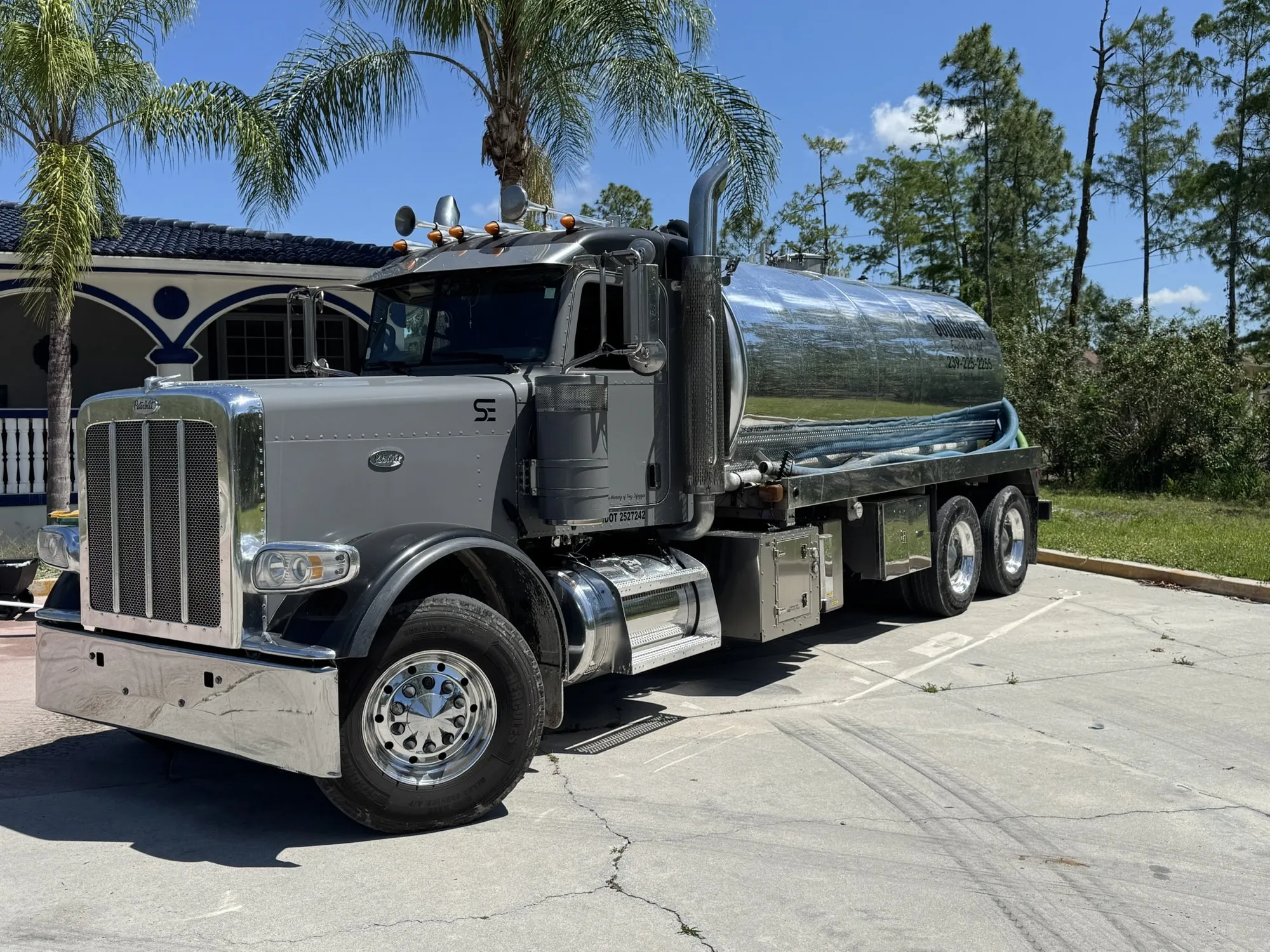
The truck carries its own water and vacuum. The operator cuts the ground with a pressure wand. The soil turns to slurry, a mix of water and dirt, and the vacuum hose pulls it into the debris tank on the truck as it is made. The hole stays open and you can see the bottom.
When a line or a cable shows, the operator slows down and works around it with water alone. No steel edge touches it. It comes up clean, and you can read the depth, the size, and the condition.
We dig to the shape you asked for: a pothole, a slot trench for new conduit, or a wider opening around a tank lid or a valve. Then we stop. The spoils leave in the truck. If you want the hole backfilled, say so when you book and we will scope it in.
What affects the job here
Southwest Florida sits on sand, shell, and limestone. Sand cuts fast with water. Shell and rock layers slow the wand down, so the operator adjusts the pressure as the hole goes deeper. Tell us if you know there is rock at your site.
The water table is high for much of the year and highest in the wet season, roughly June to October. In saturated sand a bucket makes a hole that fills and caves. The vacuum pulls the groundwater out with the soil, so the hole holds its shape long enough to do the work.
Septic to sewer conversion is under way in parts of Lee and Collier counties. New mains and laterals are going into streets that already hold gas, water, and communications lines. That is the crowded ground this method exists for.
If the dig is part of a septic install or repair, the permit still runs through the county office. Onsite sewage permitting in Florida moved from the Department of Health to the Department of Environmental Protection in 2021, and the counties still handle the paperwork. We can work under your permit or fold the excavation into a job we are already permitting.
Homes, businesses, or both
Hydro excavation is a business and municipal service.
For contractors and builders, it is the way to pothole a crossing, open a slot trench, or expose a tank on a tight lot without risking a strike. Property managers call us when a line has to come up on a plaza or a complex without tearing up the parking lot or the landscaping.
For cities and counties, a typical call is to daylight a water main or a force main ahead of a road project, expose a valve box that has been paved over, open the ground around a lift station without cutting the wiring or the piping, or slot trench for new conduit under a right of way. The same vacuum fleet that services your lift stations and catch basins does this work, on a contract or on one call.
For a home, the digging that goes with a septic repair or a drain field is part of that job, so start with the repairs page or call the office and tell us what is going on.
Licensed and local. The trucks leave from Fort Myers and cover all six counties: Lee, Collier, Charlotte, Hendry, Glades, and DeSoto. Call the office at (239) 225-2255, day or night. A real person answers, not a recording.
Common questions
What is hydro excavation?
It is digging with pressurized water and a vacuum instead of a bucket. The water loosens the soil, the vacuum pulls it into the tank on the truck, and anything buried in the hole is left where it sits, uncut. It is used most where the ground is crowded with lines or too wet for a machine.
Is hydro excavation safer than a backhoe near buried lines?
A backhoe puts a steel edge into ground where a gas line or a cable may sit off the mark. Water and vacuum do not. The operator watches the line appear and works around it by hand. That is why utility owners and inspectors often ask for it near their lines.
Do I still need to call 811 before you dig?
Yes. In Florida the locate request goes through Sunshine 811, and the marks tell us where to expect a line. The water and vacuum are how we confirm it without hitting it. If you are not sure who makes the call on your project, call the office and we will sort it out with you.
What happens to the dirt you pull out?
It leaves in the debris tank on the truck as a wet slurry, so there is no pile on your site and no mud tracked across it. If you want the hole backfilled or the surface put back, tell us when you book and we will scope that in.
Can you dig where a truck cannot reach?
Usually. The truck parks on the nearest pavement and the hose and wand go where the truck cannot: a courtyard, a strip between buildings, a landscaped bed, or the far side of a fence. Tell us the layout when you call and we will plan the setup.
Does the wet season stop the work?
No. From roughly June to October the water table is up and the hole will take on groundwater. The vacuum pulls the water out with the soil, which is the reason this method works here when a bucket would just make soup. We plan for water in the hole and keep going.