
SINCE 2010
Lift station repair and service in Southwest Florida
A lift station is a pit with a pump in it. Where wastewater cannot run downhill on its own, the pump lifts it up to the sewer main or the next tank. When that pump stops, everything behind it stops too. We service, repair and replace lift stations for homes, businesses and municipalities across six Southwest Florida counties: the pumps, the floats and the control panels. Call the office and a real person answers, day or night.
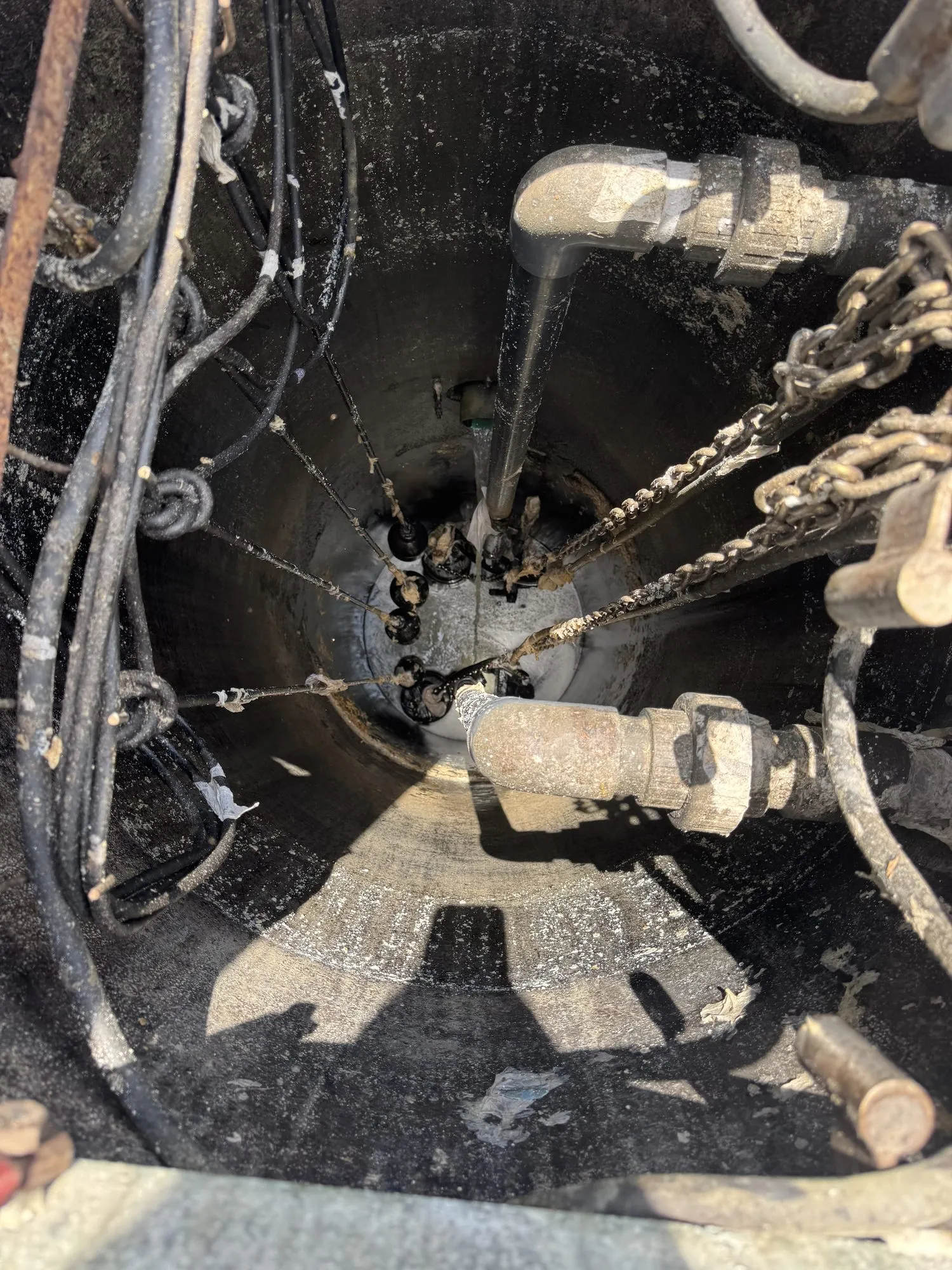
When you need it
The first sign is usually the alarm. Most lift stations have a control panel on a post next to the pit, with a red light and a buzzer. When the level in the pit climbs past where it should, the alarm goes off. That is the station telling you the pump did not keep up.
Other signs show up before the alarm, or instead of it:
- The pump runs and never shuts off, or it hums and does nothing.
- The lowest drains in the building gurgle, or the lowest toilet backs up.
- The ground around the lid is wet, or there is a sewage smell near the station.
- The breaker for the pump keeps tripping.
- The pump clicks on and off every few minutes instead of running a full cycle.
For a property manager, the sign is often a tenant calling about a backup in a ground floor unit. For a city or county crew, it is a high level alarm from a station that never called in before, or one that now calls in every day. If you are selling a property with a lift station on it, a buyer or a lender may want it checked before closing. Call the office for any of these and a real person answers.
What we do on the visit
We start at the panel, not the pit. Power, breaker, alarm, and the float settings. A float switch is a small float on a cord that tells the pump when to turn on and when to shut off. A stuck or failed float is behind a lot of lift station calls, and it is a simpler fix than a pump.
Then we pull the lid and look at the wet well, which is the pit that holds the wastewater. We check the level, the grease riding on top of it, and whatever should not be in there: rags, wipes, and debris that can jam a pump. If the well is full, we pump it down with the vacuum truck so we can see the bottom and work safely.
We pull and test the pumps: the impeller, which is the spinning part that moves the water, the check valve, which keeps wastewater from draining back into the well when the pump shuts off, and the discharge line that carries everything out. We tell you what failed and give you an honest price before we start. Then we replace what needs replacing: a float, a check valve, a panel part, or the pump itself.
Before we leave, we clean the floats so they move without catching, put the station back in service, and watch it through a full cycle. You get a plain account of what we found and what to keep an eye on.
What affects the job here
Water. For much of the year, and most of all in the wet season from June to October, the water table in Southwest Florida sits high. Groundwater finds its way into older wet wells and cracked lines, so a station runs harder in the summer than it does in the winter. A pump that was barely keeping up in March gives out in August.
Power. A lift station does nothing without electricity. When a summer storm takes the power out, the well keeps filling. After a storm we work through the stations that are down, starting with the ones that will do the most harm if they overflow, and a real person keeps answering the phone the whole time.
Soil. The sandy ground here settles around a wet well, so lids and the risers under them can end up sitting low and taking on rainwater. That is water the pump was never meant to lift.
Grease. Restaurant stations are a job of their own. Grease cakes onto the floats and holds them in place, so the pump never gets the signal to run. Regular float cleaning keeps those stations out of trouble.
Permits. If a station is part of an onsite septic system and needs full replacement, the permit goes through the county office. Florida moved onsite sewage permitting from the Department of Health to the Department of Environmental Protection in 2021, but the county still handles it, and we handle the paperwork with them.
Homes, businesses, or both
Both, and cities and counties too.
Homes. A house that sits lower than its drain field or the street needs a pump to move wastewater uphill. Mound systems and some aerobic treatment units (ATUs, which are septic systems that use air and a motor to treat wastewater) rely on a pump as well. If the alarm goes off at two in the morning, cut back on water, leave the lid alone, and call the office at (239) 225-2255. Someone answers at that hour.
Businesses. Restaurants, plazas, condo and apartment communities, and RV parks run lift stations that a lot of people depend on. For a property manager, one call and it is handled: we service the station on a schedule, respond when the alarm goes off, and keep the tenants flushing. For a kitchen, we can look at the grease trap on the same visit so the doors stay open.
Municipal. City and county crews call us for alarm response, pump pulls and swaps, float and panel replacement, wet well pump-downs and cleaning, and emergency response after a storm. We take that work on a call or on a contract, on one number, across Lee, Collier, Charlotte, Hendry, Glades and DeSoto counties.
Common questions
How do I know if my property has a lift station?
Look for a round or square lid in the yard or the parking lot with a control panel on a post nearby, usually with a red alarm light on top. If the lowest drains in the building sit below the street or the drain field, there is almost always a pump moving wastewater uphill. If you are not sure, call the office and we will tell you what to look for.
The lift station alarm is going off. What should I do right now?
Stop running water where you can: no laundry, no long showers, and hold off on flushing if you are able. Check whether the breaker for the pump has tripped, but leave the lid on and stay out of the pit. Then call the office at (239) 225-2255. A real person answers, any hour, and we will get you on the schedule.
Why does the pump run all the time in the summer?
In the wet season the water table sits high, and groundwater leaks into older wet wells and cracked lines. The pump ends up moving rainwater and groundwater on top of the wastewater it was built for. A camera down the line or a look at the well seals usually finds where the water is getting in.
Can you repair the pump, or does it have to be replaced?
It depends on what failed. A jammed impeller, a stuck float, a bad check valve or a panel fault can often be repaired on the visit. A pump with a burned out motor or a cracked housing gets replaced. We tell you which it is and give you an honest price before we do the work.
How often should a lift station be serviced?
It depends on how hard the station works. A home station with one family on it needs less attention than a restaurant station that takes grease all day or a municipal station that never rests. We set the interval to match the station and put it on a schedule, so the floats get cleaned and the pumps get checked before anything fails.
Do you take on lift station work for cities and counties?
Yes. We handle alarm calls, pump pulls, float and panel replacement, wet well cleaning and storm response for municipal stations across our six counties. Call the office to talk through scope, whether that is one station or a contract covering all of them.