
SINCE 2010
Grease trap installation and replacement in Southwest Florida
Opening a kitchen, or replacing a trap that has failed? A grease trap is the tank that catches fats, oils and grease before they reach your sewer line or your septic system, and nearly every commercial kitchen in our six counties is required to have one. We size it to the kitchen, pull the permit, set it, and get it inspected. Call the office and a real person answers.
When you need it
You are opening a kitchen and the plans call for a trap. The inspector looked at the one you have and said it is too small, or that it is done. The floor drains back up on a Friday night even though the trap was pumped last month.
Those are the usual reasons the office gets this call. A few more: a steel trap has rusted through, a concrete one has a cracked lid or water standing around it, a remodel added fryers and seats the old trap was never sized for, or you are buying a building with a kitchen and the trap does not pass.
If the kitchen is on a septic system, there is one more sign. Grease in the septic tank or out in the drain field means the trap is not catching it, and the drain field pays for that. If it is backing up right now, we offer 24/7 emergency service. Call the office at (239) 225-2255. A real person answers, and we will get you on the schedule.
What we do on the visit
First we look at the kitchen, not a catalog. Sinks, dishwashers, floor drains, seats, hours, and how many turns you do on a busy night. The size of the trap comes from that.
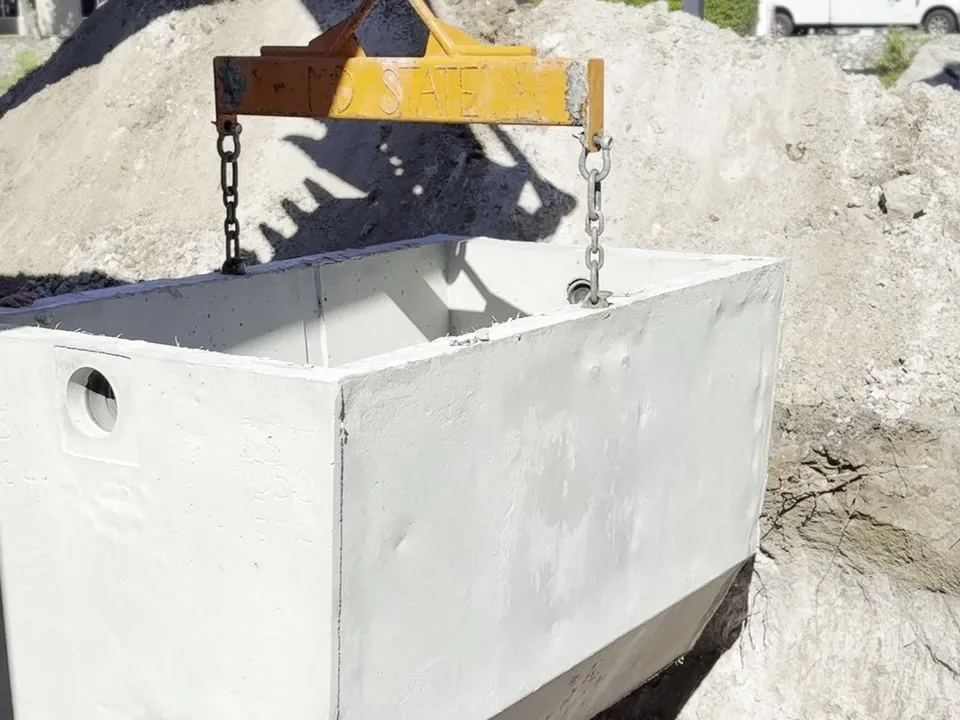
A small kitchen can use an under-sink trap indoors. A busy one needs an interceptor, which is a large in-ground tank outside the building that the kitchen lines run through. Inside either one, a baffle (a wall that slows the water down) lets the grease float and the solids settle, so cleaner water leaves through the outlet.
We pull the permit. If the kitchen is on sewer, that runs through the utility that takes your wastewater. If it is on septic, it runs through the county office. Either way, the paperwork is ours.
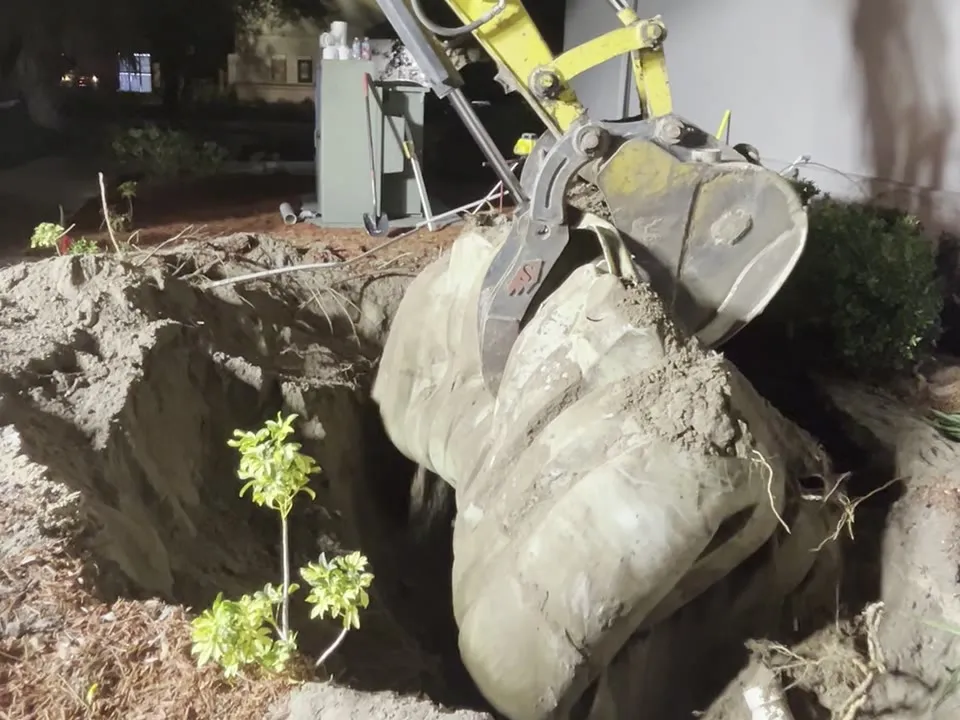
On install day we dig, set the tank, connect the inlet and outlet lines, backfill, and put the surface back. Where the trap sits near buried water, gas or power lines, we dig with hydro excavation, which uses water and vacuum instead of a bucket, so we can see those lines before a bucket would hit them.
On a replacement, we pump the old trap first and haul the grease off with a manifest (the paper record that shows where the waste went). Then we pull the old unit and set the new one, in the same visit where the site allows.
The county or the utility inspects the work. Once it passes, we set the first pumping date with you, so the new trap does not fill up and quietly become the problem you just fixed. You get an honest price on the visit, before anything is dug.
What affects the job here
Water. For much of the year the water table in Southwest Florida sits close to the surface, and from roughly June to October it is at its highest. A hole for an interceptor fills with water while we dig it, so a wet season job means pumping the hole down and working fast once the tank is set. An empty tank in saturated ground wants to float, so the backfill and the first fill are planned so it stays where we put it.
Soil. Sandy ground over limestone and shell drains fast in the dry season and caves in easily. The sides of the hole need shoring or a wider cut, and shell or rock near the bottom can change how deep the tank can go.
Permits. In 2021 Florida moved onsite sewage permitting from the Department of Health to the Department of Environmental Protection, and the permits still go through the county offices. That applies when the kitchen is on septic. On sewer, the utility sets the trap size and the pumping records it wants to see. We build to whichever one applies at your address.
Season. Dry season digging is easier and faster. Wet season work still happens, it just takes more pumping. Either way we plan the dig around your hours, so the kitchen loses as little time as possible.
Homes, businesses, or both
This is a business and municipal service. A home kitchen does not need a grease trap, and we will tell you so if you call about one.
For business, that means restaurants, cafes, bars with a kitchen, hotels, schools, churches, assisted living, and any building where food is cooked and dishes are washed. Property managers call us when a tenant’s trap fails and the whole plaza can smell it. Builders and contractors call us to set the trap and get it inspected on a new build, so their own crew can move on. Keep the kitchen open. One call and it is handled.
For a city or county, the call is usually a trap at a public building: a cafeteria, a community center, a park concession stand, or a fire station kitchen. It is the same job, on a purchase order, with the manifests and the inspection paperwork you need on file. Licensed and local since 2010. Call the office at (239) 225-2255 and a real person answers.
Common questions
Does my restaurant need a grease trap?
If your kitchen serves food and washes dishes, the county or the utility that takes your wastewater will almost always require one. The size is set by the permit reviewer, based on your fixtures and your seating. Call the office and we will tell you what applies at your address.
What size grease trap do I need?
It depends on how many sinks, dishwashers and floor drains you have and how hard the kitchen runs. The permit sets a minimum, and we size to that and to how you actually cook. A trap that is too small fills fast and sends grease down the line.
How long does a grease trap installation take?
An under-sink unit is a short job. An in-ground interceptor takes a dig, a tank set, an inspection, and in the wet season time to pump the hole down. We tell you the schedule before we start so you can plan the kitchen around it.
Can you replace the trap without closing the kitchen?
There is always a window when the kitchen drains cannot be used, but we plan that window with you. Much of the digging and setting can happen outside your hours. Tell us when you are closed and we build the day around it.
Who pulls the permit and calls for the inspection?
We do. On septic the permit goes through the county office, and on sewer it goes through the utility. We handle the paperwork and we meet the inspector.
Do you pump the trap after it is in?
Yes. We set a pumping schedule that fits how the kitchen runs and we keep the manifests, so you have a paper record if the inspector or the utility asks for one. Grease trap service has its own page, and the same office number covers both.