
SINCE 2010
Grease trap service in Southwest Florida
Trap full, drains crawling, or an inspector asking for your pumping records? We pump commercial grease traps on a schedule, leave a manifest after every visit, and keep the kitchen open while we do it. Restaurants, hotels, and property managers across Lee, Collier, Charlotte, Hendry, Glades, and DeSoto counties. Call the office. It is our direct line, and a real person answers.
When you need it
A grease trap is the tank between your kitchen drains and the sewer or septic line. It catches fats, oils, and grease (the utilities call this FOG) so they do not harden in the pipe. When the trap fills, the kitchen tells you before the trap does.
- Sinks and floor drains draining slow, or water standing in the mop sink after close.
- A sour smell near the dish pit, the back door, or the outside lid.
- Grease showing at the top of the trap, or the trap overflowing after a busy weekend.
- Water coming up the floor drain in the middle of dinner service.
- The health inspector or the utility asked for pumping records you do not have.
- A new restaurant opening, and the trap is not on a schedule yet.
- Nothing wrong yet. A trap pumped before it fills never makes this list.
What we do on the visit
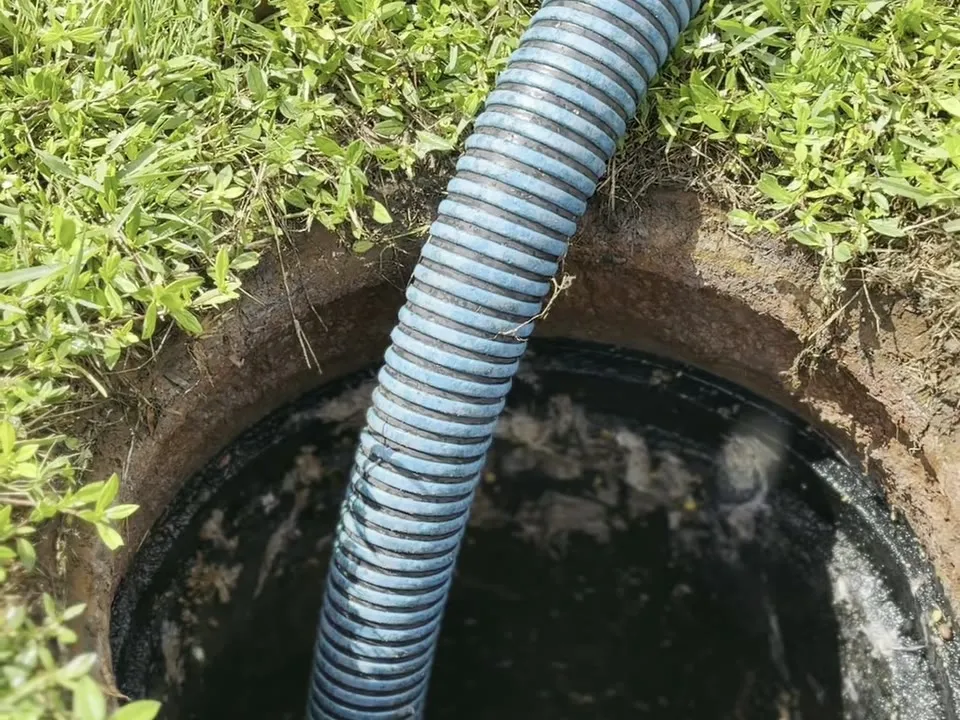
We open the trap and check the lid and the riser first. The riser is the neck between the tank and the ground surface, and a cracked one lets smell out and groundwater in.
We measure the grease layer on top and the solids on the bottom. That reading tells us how full the trap was when we arrived, and it sets your next date.
We pump the whole trap, not just the grease cap. Skimming the top leaves the solids to harden, and a hardened trap stops working long before it looks full.
We scrape the walls and the baffles. A baffle is the wall inside the tank that slows the water down so grease floats and solids sink. A baffle caked in grease lets everything straight through to the line.
We check the inlet and outlet tees, refill the trap with clean water if it is the kind that needs it, and close the lid. Then we hand you the manifest, haul the load to a permitted disposal site, and set the next date before the truck leaves.
What affects the job here
Plenty of kitchens in our six counties run on septic, not sewer. Lehigh Acres and parts of Cape Coral remain largely on septic. Grease that gets past a full trap coats the septic tank and works into the drain field, the buried pipes that let water soak into the ground. A greased drain field does not drain, and replacing one is a far bigger job than keeping the trap on a schedule.
The water table sits high from about June to October. An in-ground interceptor with a cracked lid or a failed riser seal takes on groundwater in the wet season and runs full early. That is why we check the lid and riser on every visit, not just when something leaks.
Season swings the load too. Dining rooms fill from about November through April, and a trap that held up all summer fills much faster once the visitors arrive. We set the interval by your busy months, not the slow ones.
Utilities in our area run grease programs. They can set how full a trap may get before it must be pumped, and they can ask for your manifests. The rule varies by utility, and the office can help you work out what yours expects.
Homes, businesses, or both
This is a business and municipal service. Restaurants, cafes, and bars are most of the calls. Hotels, assisted living kitchens, school and hospital cafeterias, and churches with a fellowship hall need the same thing. Property managers and plaza owners call when a shared interceptor serves several food tenants and nobody is sure whose turn it is.
A city or county calls for the same service at the kitchens it runs: a community center, a jail, a senior center, a park concession stand. One call, and it goes on a contract with the rest of your facilities.
Homes almost never have a grease trap. If the trouble is your kitchen sink at home, the septic tank is the first suspect, and the office will point you to the right page.
Trap full, inspector due, or drains crawling before the lunch rush? Call the office at (239) 225-2255. It is our direct office line, day or night, and a real person answers. Tell us the kitchen and the town and we will get you on the schedule.
Common questions
How often does a grease trap need to be pumped?
It depends on the size of the trap and how busy the kitchen is. Your utility may also set a rule for how full a trap may get before it has to be pumped. We measure the grease and solids on the first visit and set a schedule that fits both, then adjust it once we see how fast your trap fills.
What is a manifest and why does my kitchen need one?
A manifest is the record of the pump out: the date, the trap, how much came out, and where the load went. Health inspectors and the utility's grease program can ask to see it. We leave one after every visit and keep a copy at the office in case yours goes missing.
Do you have to close the kitchen while you pump the trap?
No. In most kitchens the trap is pumped from a lid outside or from one the crew can reach without shutting the line down. Tell the office your quiet hours, early morning or between services, and we will get you on the schedule for them.
What is the difference between a grease trap and a grease interceptor?
A grease trap is usually the small box under a sink or in the floor. A grease interceptor is the larger tank outside, buried in the ground. People use both words for both, and we service both. The visit runs the same way either way.
My grease trap smells. Is that normal?
A little smell right at the lid is normal. A strong smell inside the kitchen usually means the trap is past due, a lid seal has failed, or the vent is blocked. Call the office and we will get you on the schedule and check the seal while we are there.
Do houses have grease traps?
Most homes do not. If your kitchen sink is backing up at home, the septic tank is the first place we look, not a grease trap. Call the office, tell us what you are seeing, and we will send the right truck.