
SINCE 2010
Storm drain cleaning in Southwest Florida
Water still sitting in the parking lot long after the rain stopped? Storm drain cleaning clears the inlets, catch basins and storm lines that carry rain off a property, so the system moves water instead of holding it. It is a service for businesses, property managers and contractors, and for the cities and counties that own the pipes under the road. Call the office. That is our direct line, and a real person answers.
When you need it
Some signs are hard to miss. The rain stops and the water in the lot stays. A grate that used to swallow a downpour sits under a puddle for hours.
Other signs show up slowly. A smell from the inlet on a hot afternoon, or sand and grass piled up around the grate. Water bubbling back up out of a low inlet during a heavy rain means the line past it is blocked.
Some calls come on a calendar. A cleaning before the wet season so the system is ready, or a cleaning after a storm filled every inlet on the site with fronds, mulch and sand. A sale pending, with a buyer who wants to know the storm system works.
If any of that sounds like your site, call the office. You get a real person, not a menu, and we will get you on the schedule.
What we do on the visit
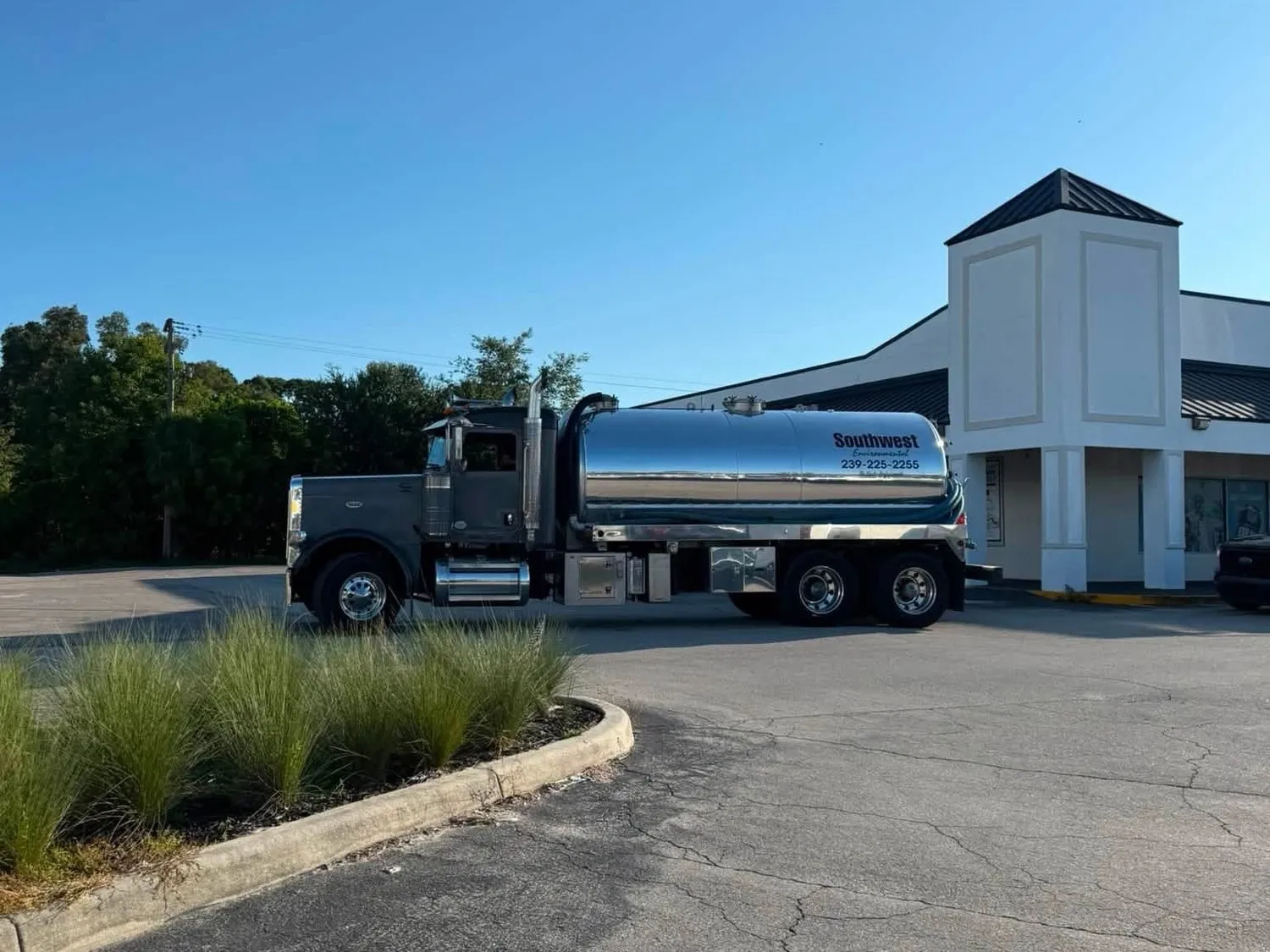
We start at the inlets. An inlet is the grate at the curb or in the lot where rain enters the system, and a catch basin is the box under it that traps sand and debris before they reach the pipe. We pull the grate and vacuum the basin down to the floor.
Then we clean the storm line, the pipe that runs from basin to basin and out to the pond, canal or outfall (the point where the pipe lets the water out). We jet the line with high pressure water to break up silt, roots and packed debris, and the vacuum truck pulls all of it back out at the basin. Nothing gets pushed downstream to become the next blockage.
If a line will not come clear, we run a camera down it. The camera shows a crushed section, a belly where the pipe has sagged, or a joint that has pulled apart. You get a straight answer about what is down there before anyone digs.
We set the grates back, hose down the area, and leave you a note of what was cleaned and what we found. You get an honest price on the visit, with no runaround.
What affects the job here
Rain comes first. Southwest Florida gets most of its rain from June to October, often in short, heavy afternoon storms. A storm system half full of silt copes fine in March and fails in August, so the best time to clean is before the wet season starts.
Sand comes next. Our soils are sandy over limestone and shell, and every heavy rain washes sand off the grass and the swales into the inlets. Sand settles in the pipe instead of flowing out, and over a few seasons it fills the bottom of the line.
Flat ground makes it worse. Most of this region has very little slope, so storm lines are laid with little fall. Water moves slowly through them, and slow water drops its load.
Hurricane season runs June to November. One named storm can drop a season’s worth of fronds, mulch and debris into a storm system in a single day. Cleaning the inlets before a storm gives the water somewhere to go, and cleaning them after puts the system back the way it should be.
Homes, businesses, or both
This is a service for businesses and for cities and counties. Most single homes do not own a storm drain. The inlets on your street belong to the city, the county or your homeowners association.
If your yard is soggy and it has not rained, the cause is usually the drain field, the buried lines where liquid from your septic tank soaks into the ground. We can help with that on a different visit.
For businesses, the call comes from a property manager with a flooded parking lot, a restaurant with a puddle at the front door, a builder whose new storm system is full of construction sand, or a contractor who hit a line and needs it cleared and checked. One call and it is handled.
For cities and counties, storm drain cleaning is route work: inlets and lines cleaned on a schedule, on a contract, with a record of each basin done. It is also storm work, when a road floods and the blockage has to be found and cleared that night. That is what 24/7 emergency service is for.
We are licensed and local, and we dispatch from Fort Myers across Lee, Collier, Charlotte, Hendry, Glades and DeSoto counties. Call the office at (239) 225-2255 to talk through scope. It is the direct office line, and a real person picks up any hour.
Common questions
How often should storm drains be cleaned?
It depends on how much sand and debris the site sheds, so there is no single right answer. Sites with open ground, mulch beds or big trees fill their basins faster. A good habit is a cleaning before the wet season, then a check after any big storm. Call the office and we will set a schedule that fits the site.
What is the difference between storm drain cleaning and catch basin cleaning?
A catch basin is the box under the grate that traps sand before it reaches the pipe. Catch basin cleaning empties that box. Storm drain cleaning goes further and clears the pipe that runs between the basins and out to the outfall. Most sites need both, and we do them on the same visit.
Can you clear the line without digging?
Usually, yes. We jet the line from the basin and vacuum the debris back out, so nothing is dug up. If the camera shows a crushed or separated pipe, that section may need repair, and we will tell you before any digging starts.
Do you clean storm drains during a storm?
We offer 24/7 emergency service, and a flooded lot or road during a downpour counts. Call the office any hour and a real person answers. We will tell you straight what can be done while the rain is still falling and what has to wait until the water drops.
What happens to the sand and debris you pull out?
It goes on the truck and leaves the site. Nothing is flushed downstream into the pond, canal or outfall, because that only moves the blockage to the next low spot. Ask the office if you need a record of the work for your files.
Who owns the storm drain in front of my property?
It depends. Inlets on a public road usually belong to the city or the county. Inlets inside a shopping center, an apartment complex or a gated community usually belong to the owner or the association. If you are not sure, call the office and we will help you work out who to talk to.