
SINCE 2010
Septic pump station repair in Southwest Florida
Pump station alarm going off, or the pump gone quiet? On many Southwest Florida systems a pump station sits after the septic tank and pushes the water out to the drain field, the buried lines where it soaks into the ground. When the pump, the float or the panel fails, the tank fills and the alarm sounds. We find the part that failed and fix it, for homes and businesses across six counties. Call the direct office line and a real person answers.
When you need it
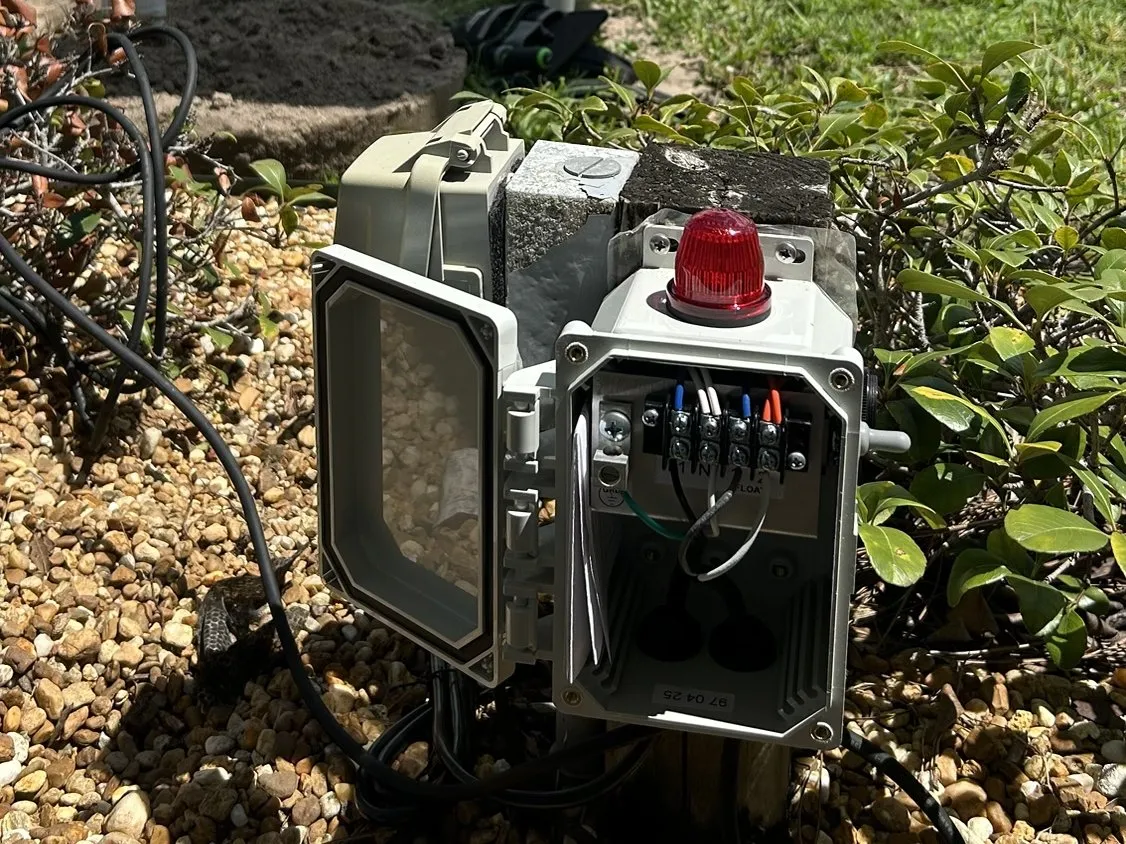
Most pump station calls start with the alarm. A red light on a box near the tank, or a buzzer you can hear from the kitchen. It means the water in the pump tank has risen higher than it should, and the system is warning you before it overflows.
Sometimes there is no alarm. The pump just stops. Then you notice the sinks draining slow, the toilet gurgling, or a wet patch over the tank lids that was not there last week. A sewage smell near the tank means the water is sitting instead of moving.
Other calls are quieter. The pump runs and never seems to shut off. The breaker keeps tripping. Or you are selling the house, the inspector flagged the pump station, and the buyer wants it fixed before closing.
If any of that sounds like your yard, call the office. A real person picks up, asks a few questions, and gets you on the schedule.
What we do on the visit
We open the pump tank and look before we touch anything. The water level, the smell, and how the floats are sitting tell us a lot.
Then we test in order. The float switch is the part that turns the pump on and off as the water rises and falls, and a float snagged on a cord or a pipe is one of the most common faults we find. We check the control panel, the box that holds the breaker and the alarm, for a tripped breaker or a burned contact. Then the pump itself: does it draw power, does it spin, does it move water.
If the pump is done, we replace it with one sized for your system and the height it has to push. If a float, a check valve (the flap that stops water running back into the tank), or a length of pipe is the problem, we replace that part and leave the good pump alone. We will not sell you a pump you do not need.
Before we leave we run a full cycle, set the floats, and test the alarm. You get an honest price on the visit and a plain explanation of what failed and why.
What affects the job here
The water table. For much of the year, and most of all in the wet season from roughly June to October, the ground here is saturated. The pump is pushing into a drain field that is already full, so the level in the tank rises and the alarm goes off. The pump may be fine. The field is the problem, and we say so rather than replace a pump that did nothing wrong.
Groundwater in the tank. When the ground is wet, water can seep in through a cracked riser (the round pipe that brings the lid up to ground level) or a poor lid seal. The pump then moves rainwater along with wastewater and runs far more than it should. We check that the tank is holding its own water and nothing else.
Mounds and ATUs. Because the water table is high, many homes here sit on a mound system, a raised bed of sand the water is pumped up into, or on an aerobic treatment unit, an ATU, which treats the water with air before it leaves. Both depend on a pump every day. On an ATU we are certified on Hoot, Norweco, Jet, Fuji Clean, and more, so the parts we fit are the right ones.
Storms and power. Summer storms knock out power and send surges down the line. No power, no pumping, and a surge can take out the panel or the motor. If the alarm is on after a storm, call, and we will check the panel first.
Permits. Swapping a pump for a like one is normally a repair. If the tank has to be replaced or the drain field changed, a permit comes into it. Florida moved septic permitting to the Department of Environmental Protection in 2021, and the permit still runs through the county office. We handle that paperwork.
Homes, businesses, or both
Both. For homeowners, the pump station is the part of the system you never think about until it stops. We fix it, show you where the alarm is and what it means, and get your house back to normal.
For businesses, a failed pump means water backing up into a building with people in it. Restaurants, property managers and contractors call us because one call handles it, and because the office answers when a tenant calls at night. If your building runs on a full lift station, the larger cousin that lifts wastewater from a low point up to a sewer main, that page is linked below.
Whoever you are, the number is the same. Call (239) 225-2255, the direct office line, with 24/7 emergency service, and a real person answers.
Common questions
Why is my septic alarm going off?
The alarm means the water in the pump tank is higher than it should be. The usual causes are a tripped breaker, a float that is stuck, a pump that has failed, or a drain field too wet to take any more water. Cut back on water use, do not silence the alarm and forget it, and call the office.
Can I still use water while the alarm is on?
Use as little as you can. The tank holds some reserve above the alarm float, but every load of laundry eats into it. Skip the washer and the dishwasher, keep showers short, and call us so the reserve is still there when the truck pulls up.
How do I know if it is the pump or just the float?
From outside the tank you usually cannot tell, and guessing gets expensive. We test the floats, the panel and the pump in turn, so the part we replace is the part that failed. More often than people expect, the float is hung up on a cord and the pump is fine.
What is the difference between a septic pump station and a lift station?
Same idea, different size. A pump station on a home system moves water from the septic tank to the drain field or mound. A lift station moves wastewater from a low point up to a sewer main or a larger system, and you find them at businesses, in subdivisions, and on city and county lines. We service both.
Will the new pump be the same as the old one?
Not always, and it should not be if the old one was the wrong size. We size the replacement to your tank, the pipe, and how far and how high it has to push. A pump that is too small runs all day, and one that is too big floods the field.
Do you repair pump stations at night or on weekends?
Yes. We offer 24/7 emergency service. Call (239) 225-2255 at any hour and a real person answers, not a recording and not an answering service.